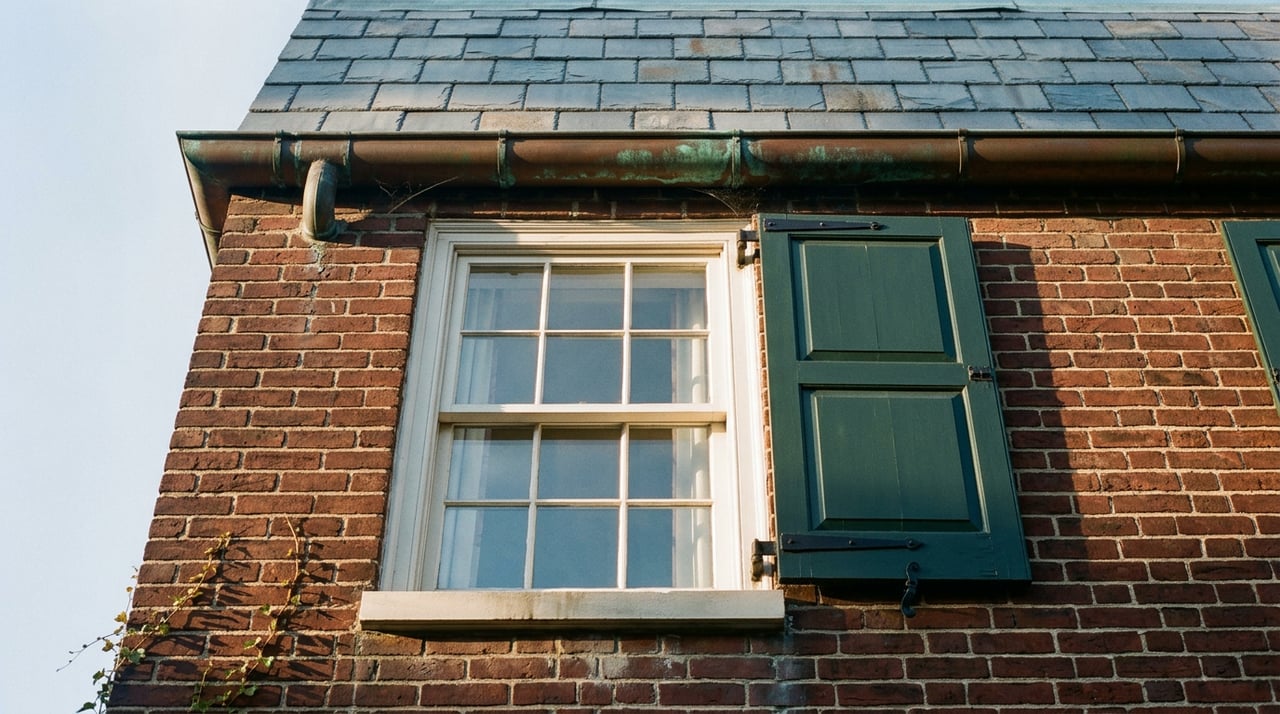
Ask most people what stands between a Georgetown rowhouse and the renovation they have planned for it, and they will talk about budget, or finding the right contractor, or how long a kitchen gut takes these days. Those are real considerations. None of them are the constraint that actually decides your timeline.
The real constraint, according to the D.C. Office of Planning, is a three-person panel of architects who meet once a month, in a federal building, on a schedule that has nothing to do with your closing date. If your project touches anything visible from the street, their calendar does not bend for anyone.
The Board That Actually Runs the Clock
Georgetown sits inside a historic district that most DC neighborhoods do not share: it is governed by the Old Georgetown Act of 1950, a federal law that put design review of the neighborhood's exteriors under the U.S. Commission of Fine Arts rather than the city's own preservation board. The Commission delegates the actual review work to an advisory group it appoints, the Old Georgetown Board, made up of three architects. They look at your drawings first. Their recommendation then goes to the full Commission of Fine Arts for final action.
This matters because it means a Georgetown renovation is not running on DC's Historic Preservation Review Board timeline the way a project in Capitol Hill or Dupont Circle would be. It is running on a federal review calendar, set by a federal agency, meeting in a federal building at 401 F Street NW. That distinction sounds procedural until you understand what happens when the federal government itself stops running.
What the Calendar Actually Looks Like
The Old Georgetown Board meets the first Thursday of every month except August. The Commission of Fine Arts says filing deadlines to the Department of Buildings fall three weeks ahead of each meeting. Miss that window and the next opportunity is not next week. It is next month.
Even a clean, uncontested project has to clear two separate steps:
- The Old Georgetown Board reviews the application at its monthly meeting and makes a recommendation.
- The full Commission of Fine Arts formally adopts that recommendation, compiled into what's called the Old Georgetown Appendix, at its own meeting roughly two weeks later.
A straightforward window replacement and a contested rear addition both have to pass through this same two-step sequence. The difference is how many times you have to go back through it.
One detail worth building into any long-range plan: approved Old Georgetown Board and Commission of Fine Arts designs are not permanent. They expire four years after issuance if construction hasn't substantially started, at which point the project has to be resubmitted under whatever guidelines are current at the time.
When Washington Shuts Down, So Does Your Permit
Here is where the federal nature of this process stops being a technicality and starts being real risk. On October 1, 2025, the Old Georgetown Board's scheduled meeting was cancelled outright. Not postponed to a different day that week. Cancelled, with no new submissions accepted, because of a lapse in federal appropriations that closed the Commission of Fine Arts along with the rest of the shuttered federal government.
A property owner in Dupont Circle or Capitol Hill, working through DC's own Historic Preservation Review Board, would not have felt that particular disruption. A property owner in Georgetown, whose exterior work runs through a federal design review board, lost an entire monthly cycle during a lapse in federal appropriations. That is not a hypothetical risk you plan around out of caution. It happened within the last year, and it is a direct consequence of Georgetown's review process sitting under federal rather than purely local jurisdiction.
If you are underwriting a renovation timeline in Georgetown, that is the fact that changes the math. A generic permit delay is frustrating. A delay tied to the federal budget calendar is a different category of risk, and it belongs in how you think about carrying costs on a project with exterior scope.
The Only Test That Matters: Can It Be Seen From the Street
None of this applies if your renovation stays inside the walls. The Commission of Fine Arts is explicit that Old Georgetown Board review is triggered only by changes to the exterior of a property, or anything visible from public space. A kitchen gut, a reconfigured basement, new mechanical systems tucked behind drywall: all of it can proceed on the District's standard permitting track with no design review at all.
That single distinction reorganizes how a Georgetown renovation budget should be built.
Scope of work | Review required | Rough timeline impact |
|---|---|---|
Interior-only (kitchen, basement, systems) | None from OGB or CFA | Standard DC permit timeline applies |
Anything visible from a street, sidewalk, or alley, including the roofline | Old Georgetown Board, then Commission of Fine Arts | Two review steps, with CFA action about two weeks after OGB; more for revisions |
DC's own general permitting guidance already tells homeowners to expect 6 to 12 weeks added to a standard timeline for historic district review, on top of a baseline residential permit window that commonly runs 2 to 4 months. Layer Georgetown's federal review calendar and its exposure to shutdown risk on top of that baseline, and the gap between an interior renovation and an exterior one widens further than most renovation budgets account for.
For a buyer comparing an unrenovated Georgetown rowhouse to a similar project elsewhere in the District, this is the question that actually separates the two, not square footage or finish level. Will the value you're trying to unlock come from something a pedestrian can see, or from what happens behind the front door.
Writing the Contract Around the Board's Calendar, Not Yours
A thirty-day due diligence period, the kind that shows up in a lot of standard contracts, was not written with a federal design review board in mind. If exterior work is part of the plan, that window closes before you have even confirmed which month your project would first be eligible for a meeting.
A few adjustments that follow directly from how this calendar actually works:
Build the study period around the Board's real dates, not a round number of days. Check the current Old Georgetown Board meeting schedule and filing deadlines before setting a feasibility period, so the clock you negotiate actually lines up with the clock the Board is running.
Ask what's already on file. If a property has a prior Old Georgetown Board or Commission of Fine Arts approval, find out how recent it is. Remember the four-year expiration. An approval from two years ago still has runway. One from five years ago means starting over.
Model both review steps, not just the OGB meeting, for anything with exterior scope. Even projects with no opposition need to clear the OGB meeting and the CFA meeting that follows about two weeks later. Anything short of that in your planning is optimistic.
Treat federal shutdown risk as a real line item, not background noise. The October 2025 cancellation is recent enough to be instructive rather than historical. A carrying-cost buffer that accounts for a possible lost month is not overcautious. It is what actually happened last year.
None of this changes what Georgetown is worth. It changes how confidently you can price the gap between an unrenovated rowhouse and its finished comparable two blocks away, and how you write a contract that survives contact with a calendar you don't control.
A Few Direct Questions
Does a kitchen or basement renovation need Old Georgetown Board approval? Not if the work stays entirely inside the house. Review is triggered only by changes visible from a public street, sidewalk, or alley.
What happens if I miss a filing deadline? The application waits for the next monthly meeting. Since submissions are due three weeks ahead of each Old Georgetown Board meeting, missing that window typically means a full month's delay, not a few days.
How long is an approved design good for if I don't start construction right away? Four years from issuance. After that, the project needs to go back through review under whatever guidelines apply at the time.
Georgetown rewards owners and buyers who treat this calendar as a planning input from the first conversation, not a surprise that surfaces after closing. If you're evaluating a Georgetown property with renovation upside, or weighing whether to complete exterior work before listing, Mike Aubrey and the team can walk through what's realistic for your specific timeline and how to structure the contract around it. Get in touch.
This article is general information, not legal, tax or financial advice. Consult a qualified professional about your situation.