Choosing between Wesley Heights and Spring Valley is not a small decision. Both are established Northwest DC enclaves with detached homes, mature landscaping, and a quieter residential feel, but they do not live exactly the same day to day. If you are trying to decide which neighborhood better fits your priorities, this comparison will help you sort through layout, architecture, outdoor access, and practical connectivity. Let’s dive in.
What Wesley Heights and Spring Valley Share
Wesley Heights and Spring Valley have similar roots. According to DC planning and preservation sources, both were shaped by the W.C. and A.N. Miller Company as upper Northwest planned suburban-style residential communities, with development dates tied to 1925 for Wesley Heights and 1929 for Spring Valley.
They were conceived as primarily residential enclaves rather than mixed-use urban districts. In both neighborhoods, you will find detached single-family homes, landscaped streets, private yards, community-oriented planning elements, and access to parks or open space.
That shared DNA matters if you are deciding between them. You are not comparing an urban retail hub to a suburban-style pocket. You are comparing two low-density Northwest DC neighborhoods that offer a similar broad lifestyle, with some important differences in how they feel and function.
Wesley Heights at a Glance
Wesley Heights sits between Nebraska Avenue, New Mexico Avenue, Garfield Street, and Battery Kemble Park. Its location gives it a strong edge-of-park identity, which is one of the clearest distinctions between the two neighborhoods.
The neighborhood also has an older and slightly more varied architectural story. DC planning sources note that Wesley Heights includes surviving pre-Miller houses from the 1890s along with Miller-built detached homes from roughly 1923 to 1935, creating a streetscape with more stylistic variety than you may see in Spring Valley.
Another defining factor is zoning. DC zoning officials state that the Wesley Heights Overlay District was created to preserve and enhance the area’s low-density character, trees, air and light, and harmonious design through standards such as front-yard setback and lot-coverage limits.
Spring Valley at a Glance
Spring Valley sits between Massachusetts Avenue, American University, Nebraska and Loughboro, and Dalecarlia Parkway. Its footprint gives it a different orientation, with more of its daily identity tied to the Massachusetts Avenue corridor and its own internal planning.
Planning sources describe Spring Valley as a more deliberately designed neighborhood that followed natural contours rather than a traditional grid. The original plan retained mature trees, installed underground power lines, set aside two small stream-valley parks, and created larger lots with wooded yards.
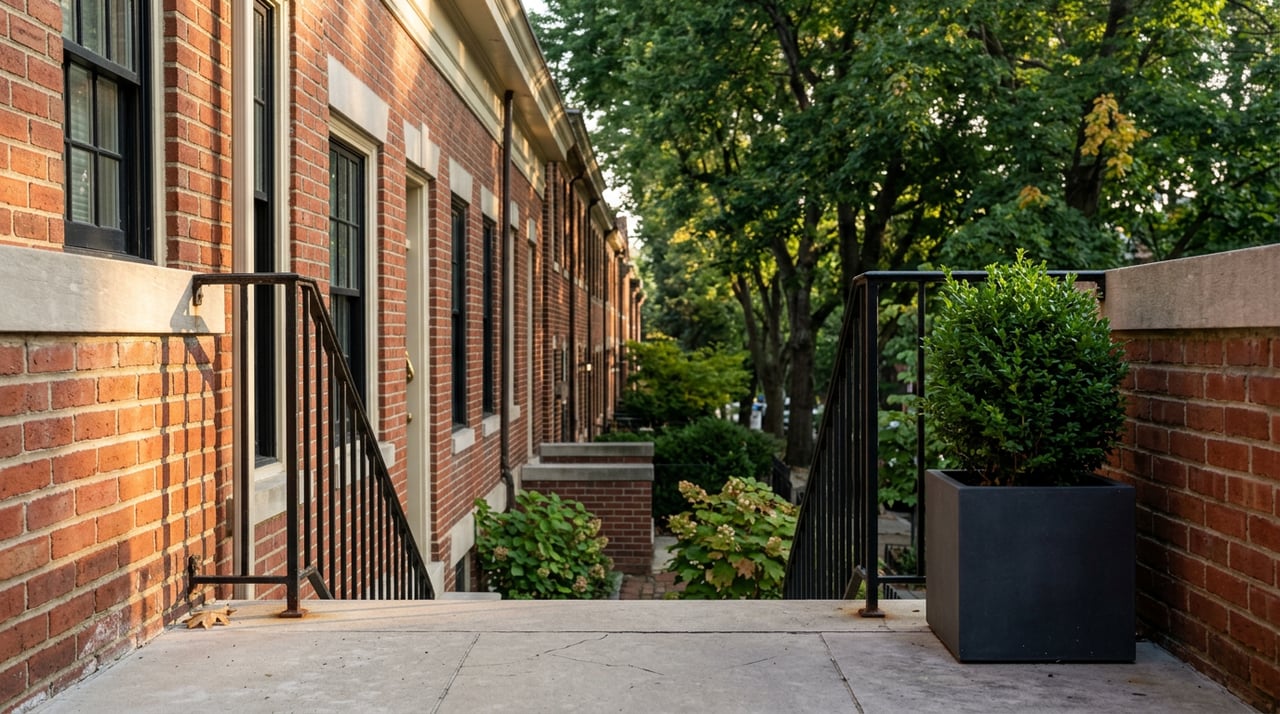
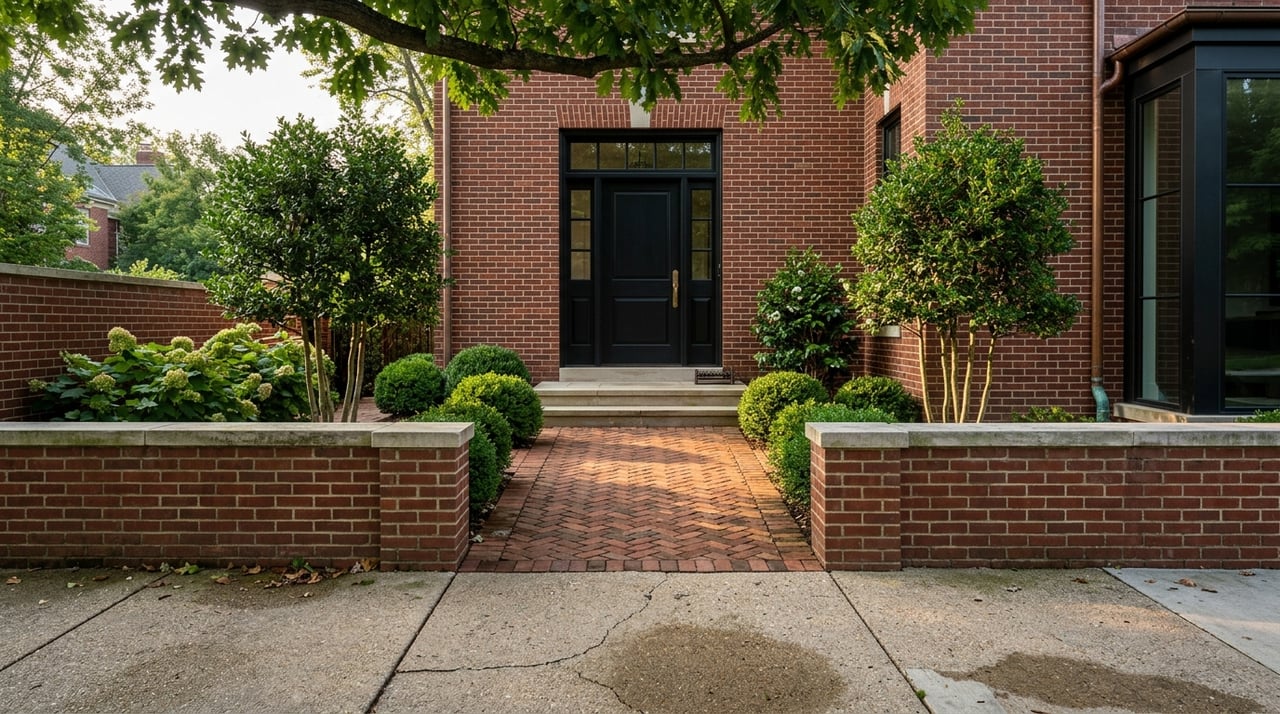
Spring Valley’s housing stock is also more visually consistent. DC planning materials describe many homes there as revival-style, usually two-story, five-bay, brick- or stone-faced houses with gabled roofs.
Architecture and Streetscape Differences
If architecture is high on your list, Wesley Heights and Spring Valley offer different kinds of appeal. Wesley Heights tends to feel a bit more eclectic because of its mix of earlier houses and later Miller-era homes, along with a street layout that largely followed the District’s grid pattern.
Spring Valley reads as more uniform and more intentionally composed. Its planning around topography, mature trees, and larger wooded lots gives many blocks a cohesive look and a more curated residential rhythm.
In simple terms, Wesley Heights may appeal more if you value architectural variety and a sense of layered neighborhood history. Spring Valley may appeal more if you prefer a more consistent streetscape and a setting that feels more fully planned from the ground up.
Outdoor Setting and Green Space
This is one of the most useful side-by-side comparisons for buyers. Wesley Heights is the more immediate park-edge neighborhood, while Spring Valley is more oriented around internal stream-valley green space.
Wesley Heights is bordered by Battery Kemble Park on the west. The National Park Service identifies Battery Kemble as part of Rock Creek Park, with a trailhead, scenic-view amenities, and Civil War earthworks. Wesley Heights also connects into the broader Northwest green network that includes Glover-Archbold Park, which the National Park Service describes as a 183-acre park with a nearly 2.5-mile foot trail from Van Ness Street NW to Canal Road NW.
Spring Valley’s green space works differently. The DC Department of Energy and Environment says Spring Valley Run flows east to west through Spring Valley Park, where a 2019 restoration improved trail access, reduced erosion, and re-established native riparian vegetation.
From a lifestyle standpoint, the difference is easy to picture. Wesley Heights feels more like a residential enclave at the edge of major parkland. Spring Valley feels more like a neighborhood shaped around its own wooded and stream-based open space.
Shopping and Everyday Errands
Neither neighborhood functions like a dense, highly urban retail district. That is important to understand upfront if you are prioritizing blocks of storefronts or a classic main-street setting.
Wesley Heights historically centered around the Wesley Heights Community Club & Shops at 3301 45th Street NW. Spring Valley’s shopping core developed around the Massachusetts Avenue Parking Shops and the Spring Valley Shopping Center.
Preservation records describe Spring Valley’s shopping area as an early automobile-oriented retail model, with one- and two-story brick Colonial Revival commercial buildings, parking in front, and direct access from Massachusetts Avenue. In practical terms, that gives Spring Valley’s retail node a more visibly auto-oriented character, while Wesley Heights’ smaller commercial node reads as more locally scaled.
Commute and Bus Access
If you rely on bus service or want more direct corridor connectivity, this category may matter. Under WMATA’s Better Bus network launched on June 29, 2025, the D96 route runs along the Massachusetts Avenue corridor through places including Friendship Heights, Glover Park, Dupont Circle, and Farragut Square, with weekday and weekend service.
WMATA also shows the C85 route running via Nebraska Avenue, Tenleytown, Glover Park, Foxhall Village, and Canal Road toward Foggy Bottom, but only during weekday peak periods. Based on the neighborhood boundaries and route profiles, Spring Valley appears to have the more straightforward all-day connection through the Massachusetts Avenue side, while Wesley Heights is more dependent on perimeter service and peak-period routing.
That does not make one neighborhood universally better than the other. It simply means your day-to-day experience may differ depending on whether all-day corridor bus access is a high priority for your household.
Housing Feel and Lot Pattern
Both neighborhoods are dominated by detached single-family homes, but the inventory does not feel identical. Wesley Heights offers a slightly broader mix, including older surviving houses and Miller-era homes from the 1920s and 1930s.
Spring Valley presents as more consistently planned, with larger wooded lots and a more uniform revival-style housing pattern. If you are comparing specific homes, this can translate into a choice between more architectural variety in Wesley Heights and more visual consistency in Spring Valley.
Wesley Heights also gets an added layer of low-density protection through its overlay district. For some buyers, that reinforces the appeal of privacy, setbacks, and a more open residential pattern.
Which Neighborhood May Fit You Better?
The right choice usually comes down to what you value most in your daily environment. Both neighborhoods offer established Northwest DC residential character, but the tie-breakers are often subtle and highly personal.
Wesley Heights may be the better fit if you want:
- A stronger park-edge setting
- More architectural variety
- An older neighborhood story with some pre-1920s homes
- A privacy-forward, low-density feel shaped by overlay standards
Spring Valley may be the better fit if you want:
- A more intentionally planned neighborhood layout
- Larger wooded lots
- A more uniform revival-style streetscape
- More direct everyday orientation to the Massachusetts Avenue bus corridor
If you are torn, the best next step is usually not theoretical. It is walking and driving both neighborhoods block by block, then comparing how each one aligns with your priorities around architecture, outdoor access, connectivity, and home style.
For buyers evaluating premium Northwest DC neighborhoods, these micro-differences can have an outsized impact on long-term satisfaction. If you want strategic guidance on how Wesley Heights and Spring Valley compare in the current market, The Mike Aubrey Group can help you narrow the decision with clear, local, negotiation-forward advice.
FAQs
What is the main difference between Wesley Heights and Spring Valley?
- Wesley Heights is more defined by park-edge privacy and architectural variety, while Spring Valley is more defined by intentional planning, larger wooded lots, and stronger orientation to the Massachusetts Avenue corridor.
Is Wesley Heights or Spring Valley more connected to parks?
- Both have meaningful green space, but Wesley Heights is directly tied to Battery Kemble Park and the broader Northwest park network, while Spring Valley is shaped more by its internal stream-valley park setting.
Does Spring Valley have more uniform architecture than Wesley Heights?
- Yes. DC planning sources describe Spring Valley as having a more consistent revival-style housing pattern, while Wesley Heights includes a wider mix of older houses and 1920s to 1930s Miller-era homes.
Is Wesley Heights more low-density than Spring Valley?
- Wesley Heights has a zoning overlay intended to preserve its low-density character, trees, air and light, and harmonious design through standards like setbacks and lot-coverage limits.
Which neighborhood has better bus access, Wesley Heights or Spring Valley?
- Based on WMATA’s current Better Bus network, Spring Valley appears to have the more straightforward all-day access through the Massachusetts Avenue corridor, while Wesley Heights is more reliant on perimeter and peak-period service.
Are Wesley Heights and Spring Valley walkable retail neighborhoods?
- Neither is best described as a dense urban retail district. Wesley Heights has a smaller local-scale commercial history, while Spring Valley’s historic shopping area was planned in a more auto-oriented format.